.webp)
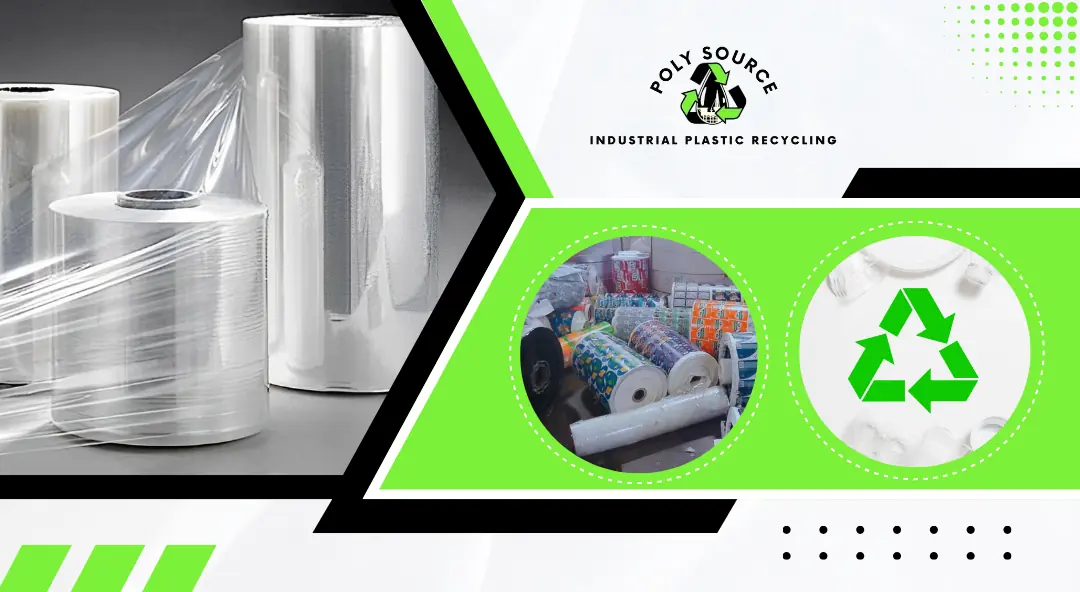
BOPP film generates a lot of scrap. Every converting operation, every printing job, every packaging line running biaxially oriented polypropylene produces edge trim, startup waste, off-spec rolls, and end-of-run material. That scrap represents usable polypropylene that can be processed back into resin pellets for manufacturing. The question is whether it gets recycled well or recycled poorly.
At Poly Source, we buy BOPP scrap from converters, printers, and packaging operations, and we move it into recycling streams that produce PP resin. This guide covers how BOPP film recycling actually works, what makes the process succeed or fail, and what both scrap generators and resin buyers need to understand about the material.
Key Takeaways
- BOPP film is polypropylene. It recycles through standard PP mechanical recycling infrastructure: shredding, washing, extrusion, and pelletizing.
- Clean, unprinted BOPP trim from converting operations is the highest-value scrap. It produces the cleanest recycled PP resin.
- Printed BOPP adds ink contamination. Metallized BOPP introduces aluminum. Laminated structures with multiple material layers are the hardest to recycle.
- The quality of recycled BOPP resin depends entirely on feedstock quality. Clean input produces clean pellets. Contaminated input produces problems.
- BOPP scrap generators who sort by type, keep material dry, and provide honest descriptions get better pricing and faster transactions.
- Recycled PP from BOPP sources works well in injection molding, compounding, extrusion, and fiber applications when the resin is properly processed.
Why BOPP Film Recycling Matters
BOPP is one of the most widely used flexible packaging films in the world. Snack wrappers, labels, overwraps, tapes, and lamination films all use it. The volume is massive, and the scrap volume that comes with it is significant. Converting operations routinely generate 5-10% scrap from edge trim and process waste alone.
That scrap is polypropylene. It has value as feedstock for recycled resin production. When it gets recycled properly, it reduces the need for virgin PP, keeps usable material out of landfill, and gives converters a revenue stream from what would otherwise be a disposal cost.
The challenge is that not all BOPP scrap is easy to recycle. Printed film, metallized film, and laminated structures all introduce complications that affect the quality and value of the recycled output. Understanding those differences is key to making BOPP recycling work for everyone in the chain.
What Is BOPP Film?
BOPP stands for biaxially oriented polypropylene. It is a PP film that has been stretched in both the machine direction and the transverse direction during manufacturing. That orientation process aligns the polymer chains, which gives the film high tensile strength, excellent clarity, good moisture barrier properties, and strong dimensional stability at very thin gauges, typically 15 to 60 microns.
BOPP is used in food packaging, labels, pressure-sensitive tapes, overwraps, lamination, and a range of industrial applications. Our BOPP material guide covers the full range of properties and applications. For this article, the important point is that BOPP is polypropylene, and polypropylene is mechanically recyclable.
Types of BOPP Scrap That Enter Recycling
BOPP scrap comes in several forms, and each type presents different recycling characteristics.
- Plain (clear) trim: Edge trim and skeleton waste from converting operations running unprinted, uncoated BOPP. This is the cleanest scrap and produces the best recycled output.
- Printed scrap: Trim and rejects from printing operations. Carries ink contamination that must be addressed during washing or tolerated in the final pellet.
- Metallized scrap: BOPP film with a vacuum-deposited aluminum layer. The metal adds barrier properties for the original application but introduces aluminum contamination into the recycling stream.
- Heat-sealable scrap: Coextruded BOPP with a sealant skin layer. Since both layers are PP-based, this recycles relatively well, though the sealant layer changes melt behavior.
- Off-spec and reject rolls: Full or partial rolls that failed quality specs. These can be high-value scrap if the base film is a single, known type.
- Laminated scrap: BOPP bonded to LDPE, CPP, adhesive layers, or foil. Multi-material structures are the most difficult to recycle because the layers cannot be easily separated.
Our BOPP scrap market guide covers the commercial side of these different scrap types, including what drives pricing for each.
The BOPP Film Recycling Process
BOPP recycles through the same mechanical recycling process used for other polypropylene scrap. Here is how it works.
- Collection and sorting: BOPP scrap is collected from converting operations, printers, and packaging plants. It is sorted by type: plain, printed, metallized, or laminated. Mixing types in the same recycling run degrades the quality of the output.
- Shredding: The sorted film is fed into shredders or granulators that reduce it to flake. Consistent flake size matters for even feeding in downstream equipment.
- Washing: Flake is washed to remove surface contamination: ink, adhesive residue, labels, dirt, and moisture. Hot washing with caustic solution handles tougher contamination. Cold wash works for cleaner streams.
- Drying: Washed flake must be dried before extrusion. Film holds moisture on its surface and in creases. Excess moisture causes foaming, surface defects, and degradation during pelletizing.
- Extrusion and filtration: Dried flake is fed into an extruder, melted, and pushed through screen packs that filter out remaining particulates. Screen mesh size and melt temperature control are critical. PP's processing window is narrower than PE, and running too hot degrades the polymer.
- Pelletizing: The filtered melt is cut into uniform pellets, cooled, and packaged. The result is recycled PP resin ready for manufacturing use.
Each step affects the final product. Skip the sorting and you get mixed material in the extruder. Rush the washing and ink shows up in the pellet. Run the melt too hot and you lose mechanical properties. Our quality control guide covers the testing and process controls that keep recycled output on spec.
Contamination Challenges in BOPP Recycling
Contamination is the main reason BOPP recycling fails to produce good resin. Here are the specific issues.
Ink: Printed BOPP carries ink that gets incorporated into the recycled pellet unless it is removed during washing. Heavy coverage rotogravure printing is harder to clean than light flexo print. Dark inks discolor the recycled output more than light colors.
Aluminum from metallization: Metallized BOPP film has a thin aluminum layer that becomes particulate contamination in the melt stream. It shows up as specks in the finished pellet. Processors who accept metallized scrap typically run it separately and sell the output for less demanding applications.
Adhesive: BOPP used in label and tape applications carries adhesive that fouls screen packs during extrusion. Adhesive residue is one of the most persistent contaminants in BOPP recycling because it is difficult to remove completely in the wash step.
Mixed materials: Laminated BOPP that includes PE layers, foil, or other non-PP materials creates cross-contamination. Different resins have different melt points and do not blend well, leading to gels and inconsistent properties.
Moisture: Film stored outdoors or in humid conditions picks up moisture that causes defects during extrusion. Proper storage and thorough drying before processing are non-negotiable.
Every one of these can be managed with the right process. But they cannot be ignored. The recycling line does not fix what the sorting step missed.
What Affects BOPP Scrap Value
Here is how the main scrap types compare in terms of recycling ease and market value.
| BOPP Scrap Type | Recycling Ease | Main Contamination Risk | Relative Market Value |
|---|---|---|---|
| Plain (clear) trim | Excellent | Minimal | Highest |
| Heat-sealable trim | Good | Sealant layer changes melt behavior | Good |
| Lightly printed | Moderate | Ink - manageable with wash | Moderate |
| Heavy print / rotogravure | Moderate-Difficult | Ink - harder to remove | Lower |
| Metallized | Difficult | Aluminum particulate | Lower |
| Laminated (multi-material) | Very Difficult | Mixed resins, adhesive, foil | Lowest |
Beyond type, other factors affect value: volume consistency, how the scrap is packed (rolls vs bales vs loose), whether it is dry, and whether the seller can provide a consistent stream over time. Our buy and sell page outlines the materials we handle.
Handling Printed and Metallized BOPP
Printed and metallized BOPP are the two scrap types that cause the most headaches in recycling. They are also the most common, because the majority of BOPP film in the market is either printed, metallized, or both.
Printed BOPP: The main approach is washing. Hot wash systems with caustic or specialized detergent can remove a significant portion of surface ink. The effectiveness depends on the ink system, print coverage, and how well the wash is designed. Even after washing, some ink residue typically remains and affects pellet color. Processors sort their washed flake by color and process light and dark fractions separately.
Metallized BOPP: The aluminum layer cannot be washed off. It is bonded to the film at the molecular level. When metallized BOPP is shredded and extruded, the aluminum becomes fine particulate in the melt. Some processors accept this and market the output as metallized-grade recycled PP suitable for applications where specks are acceptable. Others avoid metallized scrap entirely.
The practical takeaway for scrap generators: keep your printed and metallized scrap separate from your plain trim. Mixing them together drags down the value of the entire load. When we buy BOPP scrap, knowing exactly what we are getting lets us route it to the right recycling stream.
What Recycled BOPP Resin Gets Used For
Recycled PP resin from BOPP scrap finds applications across several manufacturing sectors. The end use depends on the quality of the recycled pellet.
Injection molding: Household items, storage containers, garden products, and non-appearance-critical parts. Recycled PP from clean BOPP sources runs well on standard injection equipment.
Compounding: Base resin that gets modified with fillers, colorants, and additives for specific end uses. Compounders value consistent melt flow and low contamination.
Extrusion: Sheet, profile, and non-food packaging applications. Recycled PP serves well in extruded products where strength and chemical resistance matter more than optical clarity.
Fiber: Recycled PP pellets can be spun into fiber for geotextiles, industrial fabrics, and non-woven products.
Plastic lumber and construction: Lower-grade recycled PP from mixed or contaminated BOPP goes into structural products where appearance is secondary to durability.
For a broader view of where different recycled resins fit in manufacturing, see our guide on choosing the right plastic for manufacturing. And our PP recycling guide covers the full scrap-to-resin process for all PP types, not just BOPP.
Guide for BOPP Scrap Sellers
If you generate BOPP scrap in your operation, here is how to get the best return on it.
- Sort by type: Keep plain, printed, metallized, and laminated scrap separate. Mixing kills value.
- Keep it dry: Store film scrap indoors or under cover. Wet BOPP loses value and causes processing problems downstream.
- Remove non-BOPP materials: Cores, strapping, tape, and random trash mixed into BOPP bales or gaylords reduce value and can get loads rejected.
- Know your material: Can you tell your buyer whether it is plain or heat-sealable? What gauge? What ink system? The more you know, the better the evaluation.
- Provide photos: Clear pictures of the film, how it is packed, and any visible contamination speed up the evaluation process.
- Build a consistent stream: A steady monthly supply of the same material is worth significantly more than a random one-time cleanout.
We buy BOPP scrap along with HDPE, LLDPE, polystyrene, ABS, polycarbonate, and nylon from operations across the U.S. Check our areas serviced for coverage.
Guide for Recycled BOPP Resin Buyers
If you are considering recycled PP from BOPP sources for your production, here is what to focus on.
- Request MFI data: Melt flow index determines how the resin will behave in your process. If it does not match your window, it will not run well regardless of its sustainability benefits.
- Check for specks and gels: Visual inspection of pellet samples catches contamination issues before they hit your production line.
- Understand the feedstock: Ask whether the recycled resin came from plain BOPP, printed, or metallized sources. Each produces different output characteristics.
- Run a trial: Test on your actual equipment with your normal process settings before committing to volume.
- Evaluate lot consistency: A single good lot means nothing if the next one drifts. Work with a supplier who can deliver repeatable quality.
We supply recycled PP and other commodity resins to manufacturers across the country. Contact us to discuss what you need, or browse our case studies for real examples of how we have set up supply for production operations.
Talk to Us About BOPP
If you are sitting on a stream of BOPP scrap and you want to know if it is worth moving, send me what you have. Pictures help. So do rough weights, how it is packed, and what it touched. I will tell you straight if it fits, what I would need cleaned up, and the easiest way to get it on a truck. We buy BOPP trim, rolls, and baled film from converters and packaging operations across the country. Get in touch here or browse what we buy and sell.
Frequently Asked Questions
Can BOPP film be recycled?
Yes. BOPP is polypropylene and can be mechanically recycled through shredding, washing, extrusion, and pelletizing. The resulting recycled PP pellets can be used in injection molding, compounding, extrusion, and other manufacturing processes. Clean, unprinted BOPP recycles most efficiently. Printed, metallized, and laminated BOPP requires additional processing.
What type of BOPP scrap is most valuable for recycling?
Plain, unprinted, unmetallized BOPP trim from converting operations commands the highest value. It is the cleanest feedstock and produces the best recycled output. Heat-sealable BOPP is also good since both layers are PP-based. Printed and metallized scrap have lower value due to contamination. Laminated multi-material structures have the lowest value.
Why is printed BOPP harder to recycle than plain film?
The ink on printed BOPP introduces contamination that carries into the recycled pellet if not removed. Hot washing can remove a significant portion of surface ink, but effectiveness depends on the ink system and coverage. Residual ink affects pellet color and can limit the applications the recycled resin is suitable for.
What happens to the aluminum on metallized BOPP during recycling?
The aluminum layer on metallized BOPP cannot be washed off. When the film is shredded and extruded, the aluminum becomes fine particulate contamination in the melt stream. It shows up as metallic specks in the finished pellet. Metallized BOPP scrap is typically processed separately and the output is sold for applications where specks are acceptable.
What is recycled BOPP resin used for?
Recycled PP from BOPP sources is used in injection molding for household goods and containers, compounding as a base resin, extrusion for sheet and profile products, fiber spinning for geotextiles and industrial fabrics, and construction products like plastic lumber. The quality of the recycled pellet determines which applications it can serve.
How should I store BOPP scrap before selling it?
Store BOPP scrap indoors or under cover to keep it dry. Wet film causes processing problems during recycling and reduces value. Keep different scrap types separated: plain, printed, metallized, and laminated should not be mixed. Remove non-BOPP contaminants like cores, strapping, and tape before packing.
How do I sell my BOPP scrap?
Contact a buyer who specializes in plastic scrap. Provide clear photos, describe the film type, estimate the weight, explain how it is packed, and note whether you have a consistent ongoing stream or a one-time cleanout. At Poly Source, we evaluate BOPP scrap every day and can give you a straight answer on what your material is worth.